

What is a Security Misconfiguration and How It Creates Vulnerabilities
Jan 23, 2026



In 2025, configuration mistakes sat at the center of 82% of cloud-related compromises, leaving sensitive data exposed.
As Danny Tehrani, President/Founder at Computers Made Easy, explains: “A business can only protect what it clearly understands. Security gaps are invisible until they cost you.”
Security misconfiguration sits at the center of modern cyber risk. Small and mid sized businesses move fast, focus on growth, and rely on lean IT teams. That pace creates small but dangerous cracks inside systems, applications, and cloud environments.
A single overlooked setting can open a path for attackers, and most organizations never see the gap until it becomes a breach.
Misconfiguration happens when essential controls are missing or when systems are set up incorrectly. Cloud platforms, firewalls, identity tools, and SaaS applications all carry configuration requirements. Each requirement represents a safeguard. When those safeguards fall out of alignment, the business carries silent exposure.
The impact grows quickly for SMBs. Limited staffing, rapid cloud adoption, and third party integrations create an environment where misconfigurations spread across multiple systems.
Downtime, data exposure, and financial loss follow. Every day a misconfigured system stays active, the probability of an attack increases. These risks become clear when you look at the core areas where misconfiguration creates business exposure:
-
Access control gaps: Permissions expand quietly and give users or attackers more reach than intended.
-
Cloud setup errors: Storage buckets, virtual machines, and services run without proper restrictions.
-
Unpatched components: Default settings remain unchanged and create predictable entry points.
-
Logging blind spots: Critical events go unmonitored, leaving teams unaware of active threats.
Recognizing these risks is the first step toward stronger protection. Addressing misconfiguration strengthens business continuity, protects sensitive information, and preserves customer trust. A secure configuration becomes a foundation for resilience, not an afterthought.
Eliminate Hidden Vulnerabilities Now!
Let Computers Made Easy identify and fix gaps before attackers find them.
Common Security Misconfiguration Examples
Analysis of over 40 million exposures shows that misconfigurations drive 80% of current cyber risks. Security misconfigurations appear in many forms, and most stem from small oversights that grow into serious vulnerabilities. Understanding these patterns gives your business a clear path toward stronger protection.
The following examples show where gaps form and how they impact your environment:
-
Unpatched systems: Missing updates create openings that attackers target immediately. Routine patching closes known vulnerabilities and strengthens your overall security posture.
-
Default account settings: Default usernames and passwords give intruders an easy entry point. Strong credentials and controlled access prevent unauthorized activity.
-
Unencrypted files: Plaintext data exposes intellectual property and customer information. Encryption protects sensitive files and keeps stolen data unreadable.
-
Cloud misconfigurations: Open storage buckets or unrestricted cloud services reveal data to unintended users. Proper configuration ensures cloud environments remain secure and controlled.
-
Web application errors: Weak authentication, exposed directories, and unvalidated inputs create paths for attacks like SQL injection or cross site scripting. Strong application controls protect core systems and customer facing platforms.
These examples highlight the most common weak points inside modern IT environments. Addressing them early strengthens resilience, reduces exposure, and protects your business from operational and financial impact.
How Security Misconfiguration Creates Vulnerabilities
Security misconfiguration creates silent openings inside your environment. Each incorrect setting becomes a point of entry that attackers can exploit with speed and precision. The impact reaches data, applications, and core business operations. Testing reveals that 97% of applications carry at least one vulnerability.
These vulnerabilities become clear when you look at how misconfiguration exposes your systems:
-
Sensitive data exposure: Open directories or unencrypted files reveal financial records, customer information, and internal documents. Attackers gain direct access to material that fuels fraud, identity theft, and operational disruption.
-
Directory traversal attacks: Misconfigured files and folders allow attackers to move across your environment. They escalate privileges, reach confidential areas, and extract valuable information without detection.
-
Broken authentication: Misaligned login controls give attackers a path to administrative access. Once inside, they can alter configurations, disable protections, or take full control of systems.
Small and mid sized businesses face additional pressure. Lean teams and limited budgets make continuous monitoring difficult.
A single misconfiguration can interrupt operations, weaken customer trust, and expose proprietary data. Proactive attention to configuration health strengthens resilience and protects the business from avoidable incidents.
Types of Security Misconfigurations Vulnerabilities
Different systems and applications experience distinct forms of misconfiguration. Understanding each type helps you respond quickly and strengthen your security posture.
The following categories show where misconfigurations commonly appear and how they impact your environment:
-
AD misconfiguration: Active Directory settings expose administrator or domain credentials when configured incorrectly. Attackers use these credentials to move laterally and take control of entire networks.
-
Cloud security misconfiguration: Loose permissions, open storage buckets, and misaligned identity policies create direct entry points inside cloud environments. These issues appear often in SMB cloud deployments and lead to fast moving breaches.
-
Identity access misconfiguration: Incorrect user permissions allow unauthorized access to sensitive information. Applying least privilege principles limits exposure and protects critical data.
-
Network security misconfiguration: Improper firewall rules, open ports, and weak segmentation give attackers a path into internal networks without triggering alerts.
-
Web server misconfiguration: Default files, weak SSL settings, and open directory listings reveal information to external threats. Even small oversights on a web server create significant risk.
Recognizing these misconfiguration types helps you plan effective remediation steps. Small businesses strengthen their defenses when they evaluate every layer of the environment, from cloud platforms to internal servers, and align configurations with security best practices.
Causes of Security Misconfigurations
Security misconfigurations often come from routine oversights. Small actions inside daily operations create gaps that attackers can exploit.
Understanding the root causes helps you strengthen your environment before issues spread. These common triggers show where misconfigurations begin:
-
Default credentials: Vendors ship systems with preset usernames and passwords. Attackers test these credentials first because they offer quick access with minimal effort.
-
Unused features: Extra modules or services sit inside systems without proper controls. These forgotten components create hidden entry points that attackers can discover easily.
-
Poor coding practices: Applications built without validation, sanitation, or structured error handling introduce weaknesses that attackers can manipulate.
-
Disabled protections: Antivirus tools or firewalls turned off for convenience leave systems exposed to malware, ransomware, and unauthorized activity.
Each cause connects directly to real misconfiguration risks. Addressing them strengthens your environment and reduces exposure across networks, applications, and cloud platforms.
More articles you might like:
How to Prevent Security Misconfiguration Attacks
Prevention creates stability. SMBs gain stronger protection when they apply consistent controls across systems, applications, and cloud environments. These actions build a secure foundation that supports growth and reduces operational risk:
-
Regular patching: Updates close known vulnerabilities and keep systems resilient against active threats.
-
Strong access controls: Users receive only the access required for their roles. Authentication policies and log reviews maintain visibility and accountability.
-
Secure coding standards: Developers validate inputs, encode outputs, and manage errors with care. Security built into development prevents application level misconfigurations.
-
Cloud configuration reviews: Routine audits of permissions, access rules, and storage settings close gaps inside cloud platforms.
-
Continuous monitoring: Real time alerts highlight unusual activity and configuration changes, giving teams the ability to respond quickly.
Preventive strategies protect data, maintain business continuity, and support confident growth. Strong controls create an environment where security becomes a natural part of daily operations.
Diagnosing and Fixing Security Misconfigurations
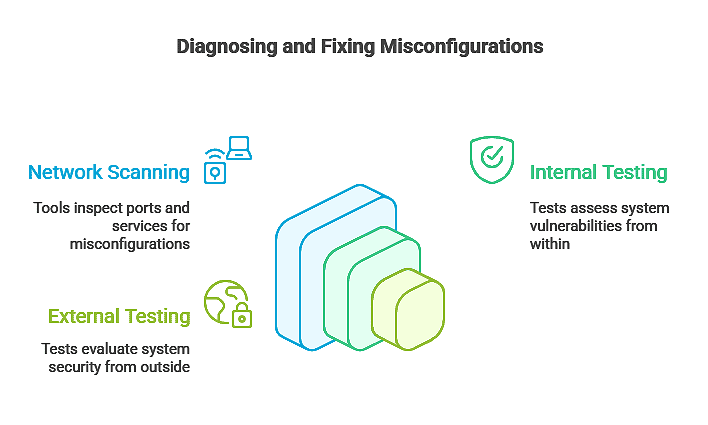
Verification strengthens every security program. Preventive measures create stability, but diagnosis confirms that systems remain aligned with security standards.
A structured approach to detection reveals hidden weaknesses and keeps your environment resilient. These diagnostic practices create clarity and control:
-
Security audits: Comprehensive reviews uncover configuration gaps across systems and applications. Audits validate settings, confirm compliance with security requirements, and highlight areas that need immediate attention.
-
Network scanning: Scanning tools inspect ports, services, and endpoints to reveal misconfigurations. Regular scans provide visibility into weaknesses that stay hidden during daily operations.
-
Internal and external testing: Penetration testing shows how attackers might exploit misconfigurations. Testing before deployment strengthens defenses and reduces exposure across production environments.
Fast detection keeps small issues from escalating into costly incidents. Diagnosis builds confidence in your IT environment and supports continuous protection. Regular reviews create a security posture that stays aligned with business needs and operational demands.
Real World Consequences of Security Misconfigurations
Security misconfigurations have moved far beyond theory. They have triggered breaches with measurable impact, proving that even small oversights can create massive exposure. These incidents highlight how attackers exploit misaligned settings and how quickly the fallout spreads across industries:
1. Default credentials
Publicly documented usernames and passwords give attackers instant access. In 2021, Nissan North America exposed internal mobile app source code because a default Git server password remained active. FOUNDATION Software faced a similar issue in 2024 when hackers brute forced 33 publicly accessible hosts, compromising accounting data across construction firms.
2. Cloud misconfigurations
Misaligned cloud storage permissions create large scale leaks. In January 2023, T Mobile’s misconfigured S3 bucket exposed data for more than 30 million customers.
3. Firewall misalignment
Capital One’s 2019 breach affected nearly 100 million U.S. and Canadian customers after a misconfigured web application firewall gave attackers access to sensitive financial records. The incident resulted in an 80 million dollar regulatory fine and a 190 million dollar class action settlement.
4. Public data settings
Microsoft Power Apps exposed 38 million records in 2021 because default public settings remained active. Organizations such as American Airlines and Ford were directly affected.
These examples show how misconfigurations translate into financial loss, operational disruption, and reputational damage. Unauthorized access, stolen data, and regulatory penalties are not abstract risks but tangible outcomes. For SMBs, even minor misconfigurations can escalate quickly, making proactive audits and continuous configuration management essential to protecting digital assets and maintaining trust.
Security Misconfiguration Quick-Check for SMBs
Below is a practical reference for SMB IT teams. It identifies common misconfigurations, their impact, and the first remediation step.
|
Misconfiguration Type |
Potential Impact |
First Step to Fix |
|
Default Credentials |
Unauthorized access |
Change all default passwords immediately |
|
Unpatched Systems |
Exploitable vulnerabilities |
Apply latest security patches |
|
Cloud Misconfigurations |
Data exposure |
Audit cloud storage permissions |
|
Web Server Errors |
Application compromise |
Remove default/sample files and enforce SSL |
|
Identity Access Misconfiguration |
Unauthorized modifications |
Review and limit user permissions |
|
Disabled Antivirus |
Malware infections |
Enable and update antivirus software |
Use this table as a starting checklist. It provides actionable insight for IT teams to identify risks quickly. Addressing these issues promptly reduces exposure and strengthens your security posture.
Secure Your IT with Computers Made Easy
Security misconfiguration is more than a technical phrase. It is a daily risk for SMBs, creating openings that attackers exploit. From default passwords to cloud gaps, these vulnerabilities weaken defenses and expose sensitive data. Recognizing misconfiguration examples, diagnosing weaknesses, and applying preventive measures builds resilience across your IT environment.
Computers Made Easy delivers proactive IT management, monitoring, and cybersecurity support.
With over 27 years of experience and a team of 18+ certified technicians, CME identifies misconfigurations quickly and resolves them before they escalate. Our expertise ensures your systems remain secure, compliant, and reliable.
Partnering with CME gives your business immediate advantages:
-
Proactive monitoring: Continuous oversight detects misconfigurations before they become threats.
-
Expert remediation: Certified technicians apply fixes that strengthen system reliability.
-
Cyber resilience: Integrated security practices protect data and maintain business continuity.
-
Trusted experience: Decades of service provide confidence that your IT environment is secure.
Close Misconfiguration Gaps
Protect your business, safeguard your data, and maintain your reputation with trusted expertise.

Contact Us
IT & Marketing Services