

Why Is Network Security Important?
Feb 06, 2026


As the number of cyber attacks continues to rise, so does the importance of network security. According to statistics, global cybercrime damage costs are estimated at $10.8 trillion in 2026 and are projected to rise to $12.2 trillion by 2031.
|
“There should be no reason for you to treat network security as an add-on compared to the mandatory cybersecurity measures that you already know are important.” – Jake Levine, CEO, Computers Made Easy |
But why do we need network security?
In this blog post, we’ll take a look at the importance of network security and explore some of the key reasons why it’s essential for your business.
Why Do We Need Network Security?
A network attack is an unauthorized action on the digital assets within your organization’s network. Network attacks are usually carried out by malicious parties to alter, destroy, or steal your private business information. To gain access to your internal systems, attackers usually target the perimeters of networks.
So, why do we need network security? The answer is simple: the costs of cybercrime can be devastating for businesses. As a result, according to CloudSecureTech, 60% of small businesses that suffer a cyber attack shut down within six months.
Cybercrime costs include:
-
Damage and destruction of data
-
Stolen money
-
Lost productivity
-
Theft of intellectual property
-
Theft of personal and financial data
-
Post-attack disruption to the normal course of business
-
Forensic investigation
-
Restoration and deletion of hacked data and systems
-
Reputational harm
These monetary losses all demonstrate the importance of network security for your business.
Prevent Threats From Spreading With 24/7 IT Network Monitoring
Why Network Security Is Important
1. Protection of Information
The importance of network security lies in the fact that it prevents cybercriminals from accessing your sensitive data.
As cyber attacks become increasingly sophisticated, your business is in greater need of advanced tools to prevent criminals from gaining unauthorized access to sensitive business information. These tools include:
-
Firewalls
-
Biometrics
-
Encryption
-
System data back-up
-
User level permissions
Without thorough network security practices in place, your business is at serious risk of having company records, passwords, client data, and other sensitive information stolen by unethical hackers and unauthorized users.
2. Increasing Risk of Data Breaches
The average number of data breaches per year affecting small businesses continues to increase as more companies migrate to digital environments for shared data.
And the biggest cybersecurity threat to organizations comes from within them. Stanford University found that employee errors, whether intentional or accidental, account for 88% of data breaches.
Through network security training, employees are equipped with the skills needed to effectively manage cyber risks in operational roles within an organization. A managed service provider (MSP) can not only safeguard the infrastructure of your network, but also train your employees in network security best practices.
Here’s how.
|
Training Focus |
What Employees Learn |
Why It Matters |
|
Network Access Control |
How to manage user access, permissions, and device connections |
Limits who and what can interact with the network |
|
Secure Configuration |
How to apply stronger settings to network devices and systems |
Reduces weak points caused by default or outdated settings |
|
Threat Recognition |
How to spot suspicious activity and abnormal network behavior |
Helps teams respond faster to real risks |
|
Incident Response Basics |
How to follow response steps and report issues correctly |
Improves coordination during high-risk events |
|
Policy Awareness |
How to follow network usage and security policies |
Keeps daily actions aligned with company standards |
|
Ongoing Best Practices |
How to apply updates, reviews, and routine checks |
Supports consistent network stability over time |
3. DDoS Attacks That Disrupt Your Website or Network Connection
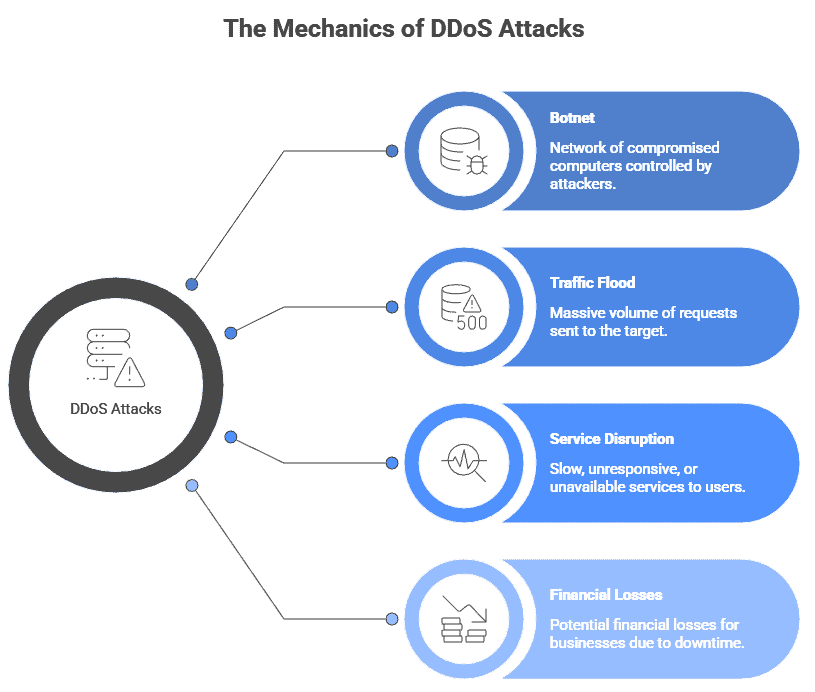
It’s important for your business to invest in network security so that in the case of a security breach or DDoS attack, you will not be left vulnerable. A distributed denial of service (DDoS) attack is an attempt to make your business’s network unusable by flooding it with traffic from multiple sources.
These attacks can cause your networks to slow down significantly, making them unable to handle normal tasks, resulting in huge losses for the company.
Good network security involves maintaining secure systems and policies that are implemented regularly and tested before use. By doing this, you can rest assured that your networks are safe from DDoS attacks and other cyber threats and ensure smoother operations throughout your day-to-day activities.
Here is how DDoS attacks work.
4. Ensuring Regulatory Compliance
Network security is an important aspect of regulatory compliance because it helps safeguard confidential information and systems from malicious activities and cyber attacks.
To maintain regulatory compliance, you must protect your corporate networks from vulnerabilities, reduce the risk of data leakage, and maintain a secure environment for conducting business transactions.
Keeping data safe by utilizing a robust type of network protection plan ensures compliance with standards set forth by governing bodies and sets a reliable foundation for keeping information secure and confidential – another reason why network security is important.
|
Learn More About Protecting Your IT Systems From Cyber Threats |
5. Establishing Consumer Confidence
By offering network security systems, you can give your clients the peace of mind that their most important assets – their computer systems, online networks, and data – are safe and protected from network threats with proper information security.
Implementing stronger authentication methods such as two-factor verification and biometric recognition protects your data from theft, manipulation, or misuse by third-party entities – ensuring legitimate authorship of the information entered.
These measures go a long way towards building consumer confidence, as your clients can rest assured that their online activities are protected with proper security measures when doing business with you.
|
Protect Your IT Network With Leading Cybersecurity Professionals From The Pacific-Northwest |
|
The Importance of Network Security and Finding the Right Managed Service Provider
Why is network security important?
With experience and expertise, a good managed service provider (MSP) can help protect against unwanted invasions, store data safely, reduce software maintenance costs, and maximize efficiency for maximum uptime.
Ensure you choose wisely when selecting an MSP – it could mean the difference between keeping your computer networks secure and facing consequences due to being unprepared.
With Computers Made Easy, you can expect to receive comprehensive support for the following:
-
System data backup
-
Encryption
-
Firewalls
-
Cybersecurity updates
-
User-level security permissions/tools
-
Conducting vulnerability assessments
-
Penetration testing
-
Disaster recovery planning and testing
Book your free consultation with Computers Made Easy today to safeguard your network!

Contact Us
IT & Marketing Services